

A shoebox with forty thousand photos in it
My phone tells me I have over forty thousand photos. Forty thousand. I didn’t take forty thousand photos on purpose. They just accumulated, the way dust does, the way junk mail does, the way everything digital quietly piles up while you’re not watching.
My grandmother had a shoebox. Actual cardboard, actual shoe smell probably still in there somewhere. Maybe three hundred photos total, built up over fifty years. Birthdays, a few blurry Christmases, one truly baffling photo of a goat. Every single one of those photos had been chosen. Someone paid for the film, paid for the developing, and decided this moment, this one, was worth the money and the wait.
I have forty thousand moments and I couldn’t tell you what’s in most of them.
The cost of nothing
Here’s the thing that changed, and it’s not really about cameras. It’s about friction. When a photo costs something — money, time, a trip to the pharmacy counter to pick up the envelope — you think before you take it. You compose it. You wait for the right light, the right smile, the moment someone’s actually looking at the camera instead of mid-blink.
When a photo costs nothing, you take six of the same thing and sort it out later. Except you never sort it out later. Later never comes. The six photos just sit there, future problems for a version of you that apparently does not exist.
I’m not saying this to be grumpy about progress. I like that I can take a photo of anything, instantly, without thinking about cost. I just think we traded one kind of scarcity for a different kind of clutter, and nobody really warned us.
Why printing still matters, even now
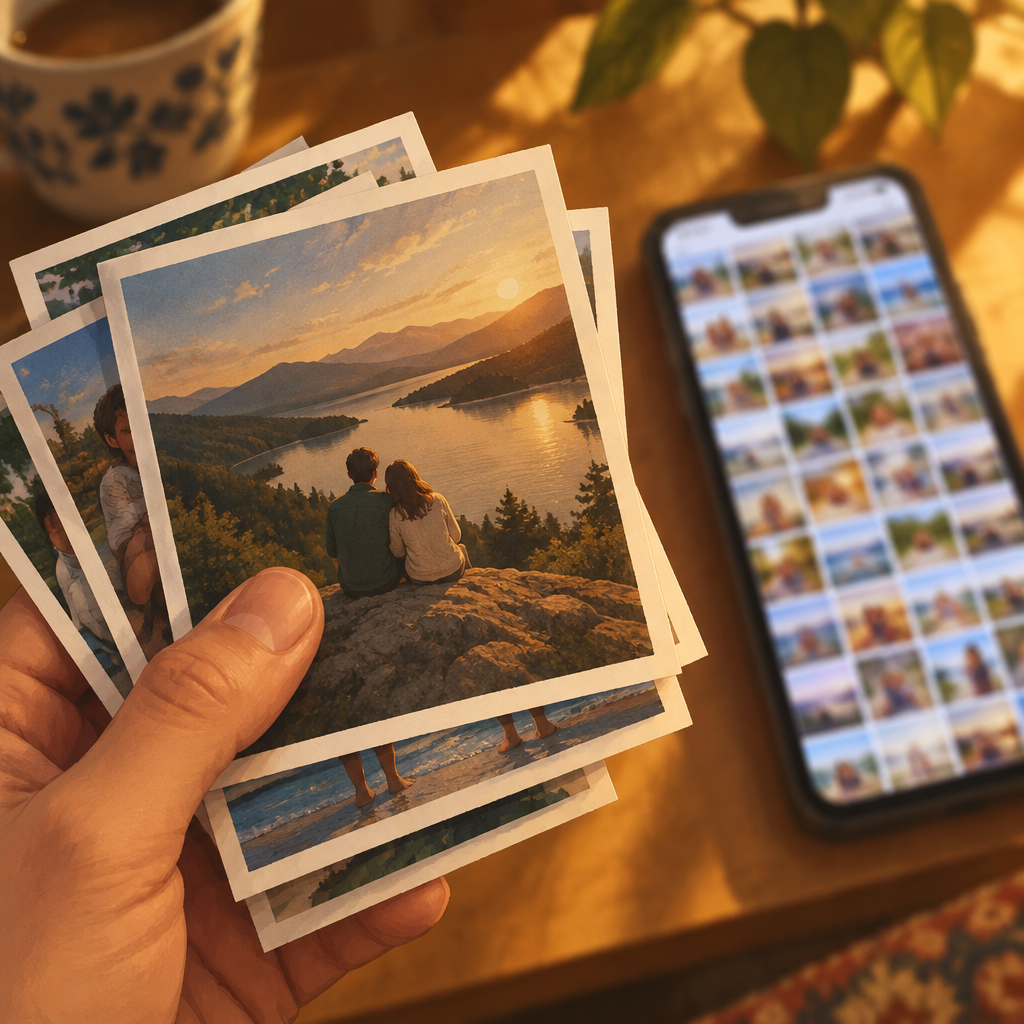
A few years back I printed a small batch of photos just to see what it felt like. Nothing fancy, just a stack from a cheap print service, maybe thirty images picked from a year’s worth of phone photos. The act of choosing thirty out of thousands was oddly painful. Genuinely hard. I kept going back and forth on whether a slightly blurry photo of a friend laughing was better than a sharp photo of the same friend not laughing.
That difficulty is the whole point. Choosing is a form of remembering. When you print something, you’re saying this one mattered enough to become a physical object. It’s going to take up space in a drawer or on a wall, which means it had better earn it.
Digital photos don’t have to earn anything. They just exist, all equally weightless, all equally forgettable.
A few small ways back to intention
- Pick one photo a month. Just one. Print it, even on a regular home printer. The limit forces a decision.
- Delete on purpose. Go through old albums occasionally and actually remove the duplicates and the blurry throwaways. It feels like cleaning a closet, and it is.
- Make a physical album every year or two. Doesn’t have to be fancy. The point is having something you can hand to someone without a screen involved.
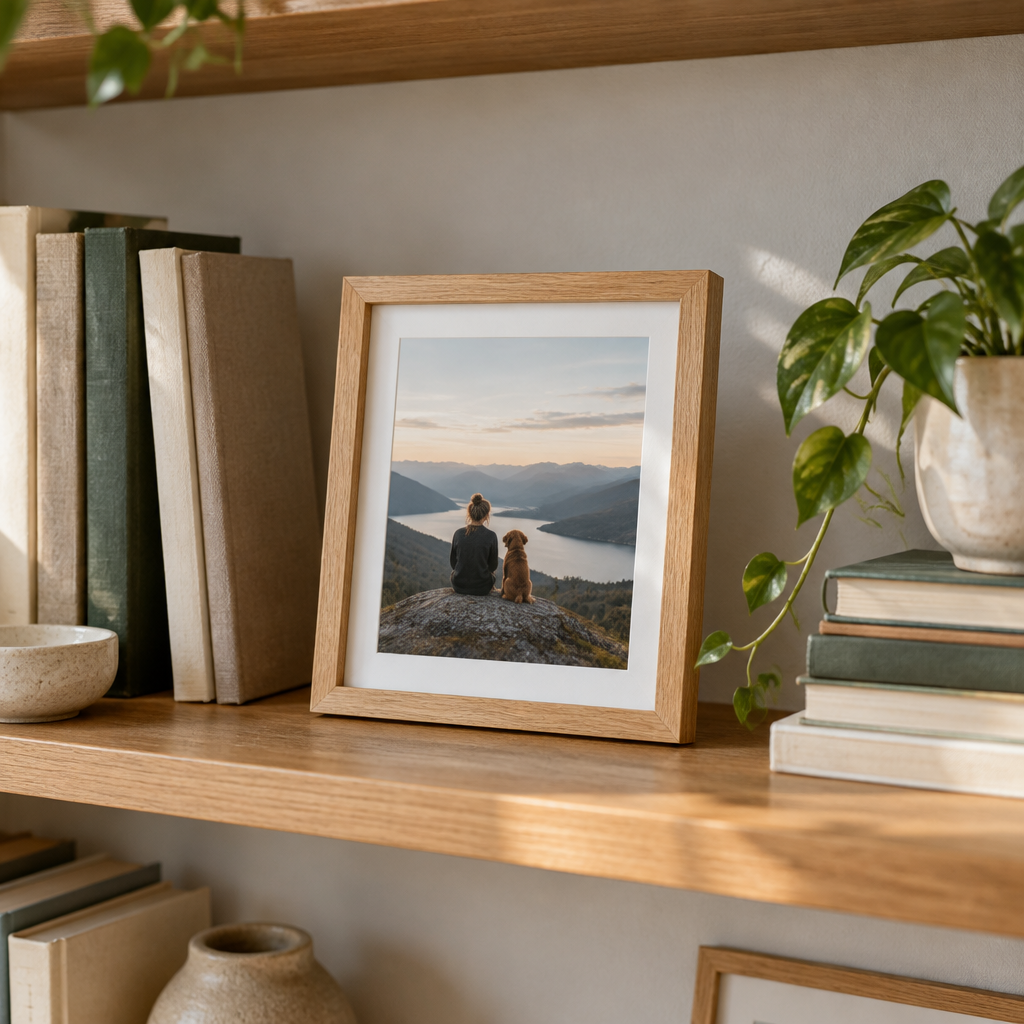
- Keep one frame rotating. A single picture frame on a shelf that you swap out now and then does more for memory than a camera roll ever will.
The strange comfort of limits
I think about this with music too, honestly. Playlists that go on forever, libraries with more songs than you could listen to in several lifetimes. There’s a particular kind of comfort in a mixtape that only fits twelve songs, because someone had to choose, had to leave things out, had to decide what mattered enough to make the cut.
Unlimited storage sounds like a gift, and in a lot of ways it is. But it removes the editing process that used to happen naturally, just because resources were limited. Now the editing has to be deliberate. Nobody does it for you. The shoebox doesn’t fill itself with only the good stuff anymore — it’s on you to go back in and pull the good stuff out.
What I actually want on my wall
I’m not trying to convince anyone to go back to film, or to print every photo they take, because that’s its own kind of absurd. What I want is smaller than that. I want a handful of photos, chosen on purpose, sitting somewhere I’ll actually see them. Not buried in a camera roll behind forty thousand almost-duplicates of the same sunset.
A shoebox of three hundred photos, chosen carefully, beats a phone full of forty thousand that nobody will ever look at twice. That’s not nostalgia talking. That’s just math, and a little bit of self-respect about what’s actually worth keeping.
So maybe this week, before you take photo number forty thousand and one, go back and find one that already exists. Print it. Put it somewhere. Let it earn its spot.